
Home / How Projects Are Approached / On-site Assessment
LAYER 1 — EXISTING CONDITIONS
Every renovation starts with an existing room, and its walls, floor and fixtures have their own history. Ivan Bodnar, an independent renovation specialist, looks at the bathroom in person before recommending a scope. He explains what he can assess, what remains uncertain and why.
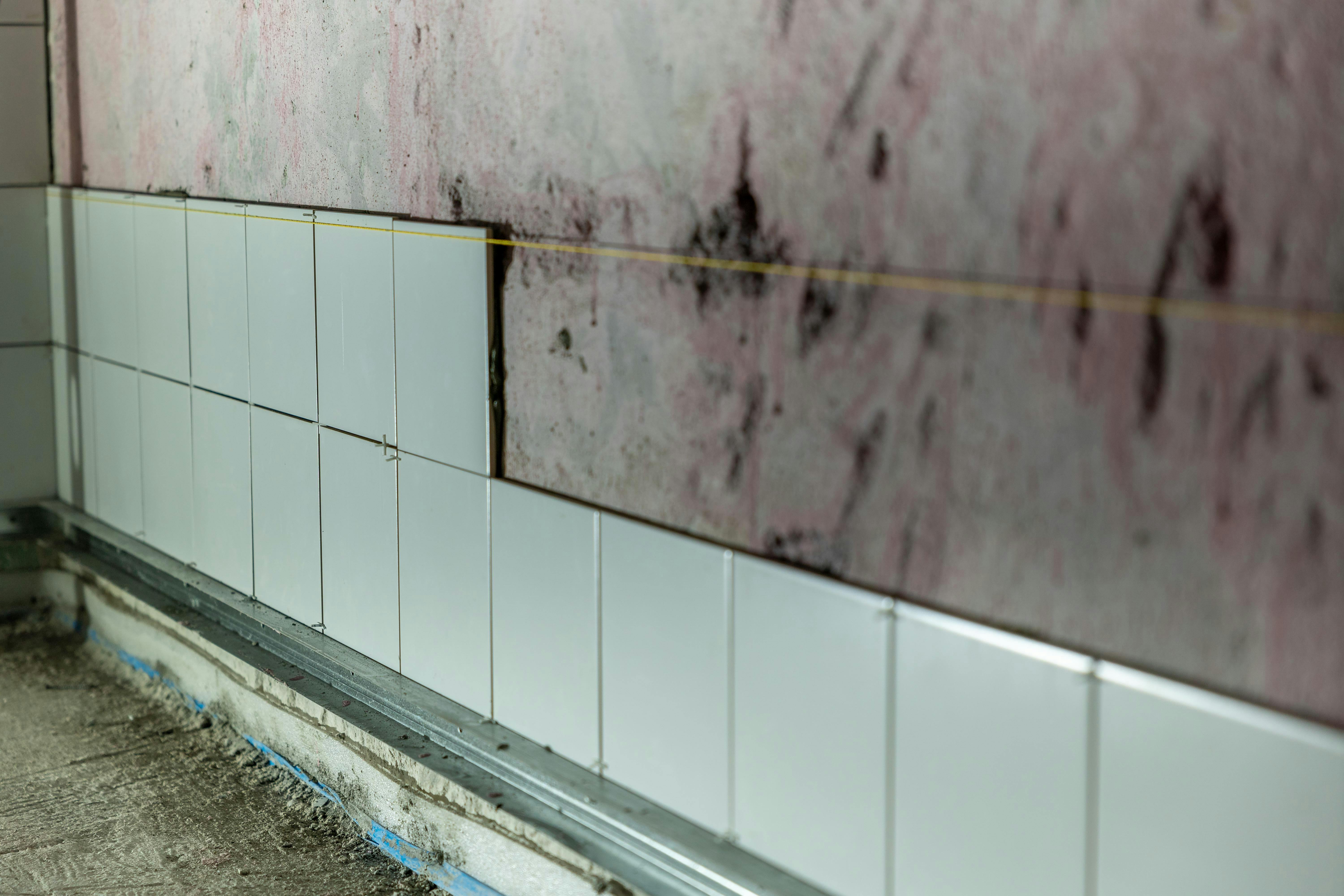
Reference photo: staining and marks on a wall beside new tiles. Conditions like these are what an assessment looks for.
WHAT THE ASSESSMENT LOOKS AT
— Cracked tiles, loose tiles and grout that is breaking down
— Visible staining, mould or marks that suggest moisture
— The condition of wall linings and ceilings that won’t be tiled
— Floor surfaces, levels and any movement underfoot
— Which parts involve plumbing, electrical or other regulated work
— How you use the room and what no longer works for you
HONEST COMMUNICATION
The findings fall into three groups. You’ll know which group each one belongs to.
01
Surface damage, worn grout, failed sealant and the general condition of finishes. These can be described with reasonable confidence on the day.
02
Signs that point to something underneath, such as staining near a shower or a hollow-sounding tile. These are noted as indications, not conclusions.
03
Whatever sits behind intact tiles and linings. Nobody can confirm it until the strip-out exposes it, so it’s raised early rather than assumed.
BEHIND THE WALL
Existing conditions and concealed issues can affect the scope after work begins. Old adhesive, damaged linings or a substrate that turns out to be unsuitable for the proposed tiling system only show up once the finish comes off.
When that happens, you’ll be told what has been found and what it means for the next stage before the work goes further. The visible finish is only one part of a successful renovation. Much of the work happens in the surface preparation underneath.
Further reading: Preparation Before Tile: Why the Substrate Matters

Reference photo: an opened wall showing linings, insulation and wiring, the kind of detail hidden behind a finished surface.
LICENSED WORK
Most bathrooms involve some plumbing or electrical work. The assessment notes where these components form part of the renovation, so they’re part of the plan from the start. Appropriately licensed specialists carry out that regulated work, and Ivan may coordinate their involvement alongside the tiling, preparation and finishing he does himself.
FROM FINDINGS TO RECOMMENDATION
The aim is a practical scope that suits the bathroom’s existing condition and what you need from the room. Sometimes sound walls and a sound floor mean updating the bathroom is enough. Sometimes the findings point to a more extensive renovation. You talk the options through directly with the person who assessed the room and will carry out the work.
Condition affects cost as well as scope. Read more in Update or Full Renovation? and Bathroom Renovation Costs, or see the full Bathroom Renovations service.
BEFORE THE VISIT
Have a few photos of the bathroom ready and note what bothers you most, whether that’s cracked tiles, failing grout or a layout that no longer works. The before-you-enquire guide covers the rest. Ivan works across Caulfield and the surrounding Melbourne suburbs.
Or email [email protected]