
Home / Bathroom Renovation Guides / Preparation Before Tile
GUIDE — SUBSTRATE AND SURFACE PREPARATION
Written by Ivan Bodnar, Independent Home Renovation Specialist, Melbourne

Reference photo: new wall tiles next to a stained older wall surface, with a level line marked.
IN SHORT
Whether a wall or floor is ready for tiling depends on the existing substrate and the proposed system. The tile is only part of that decision.
THIS GUIDE COVERS
What a substrate is, what gets checked before tiling, and where plasterboard and plastering fit in.
OUTSIDE THIS LAYER
Plumbing, electrical and other regulated work. Appropriately licensed specialists undertake these components.
RELATED SERVICES
01
PART 01 — THE FINISH
When homeowners look at a bathroom, they see tiles, grout and fixtures. How that finish holds up depends on what sits underneath: the wall linings, the floor, the adhesive bed and anything left over from earlier renovations.
Our approach starts from a simple position. The visible finish is only one part of a successful renovation. A new tile fixed to a surface that is uneven, loose or unsuited to the chosen system depends on conditions that nobody has checked.
Substrate: the surface a tile is fixed to, such as a wall lining, render or floor, together with its current condition.
PART 02 — WHAT GETS CHECKED
A
Older bathrooms often have a mix of linings and past repairs. The material affects which adhesive and installation system are appropriate.
B
Old adhesive, loose or hollow-sounding sections, cracking, moisture marks and uneven areas need to be found and dealt with first.
C
Tile size, tile type and the installation system each have their own requirements. A surface that suits one system may need more preparation for another.
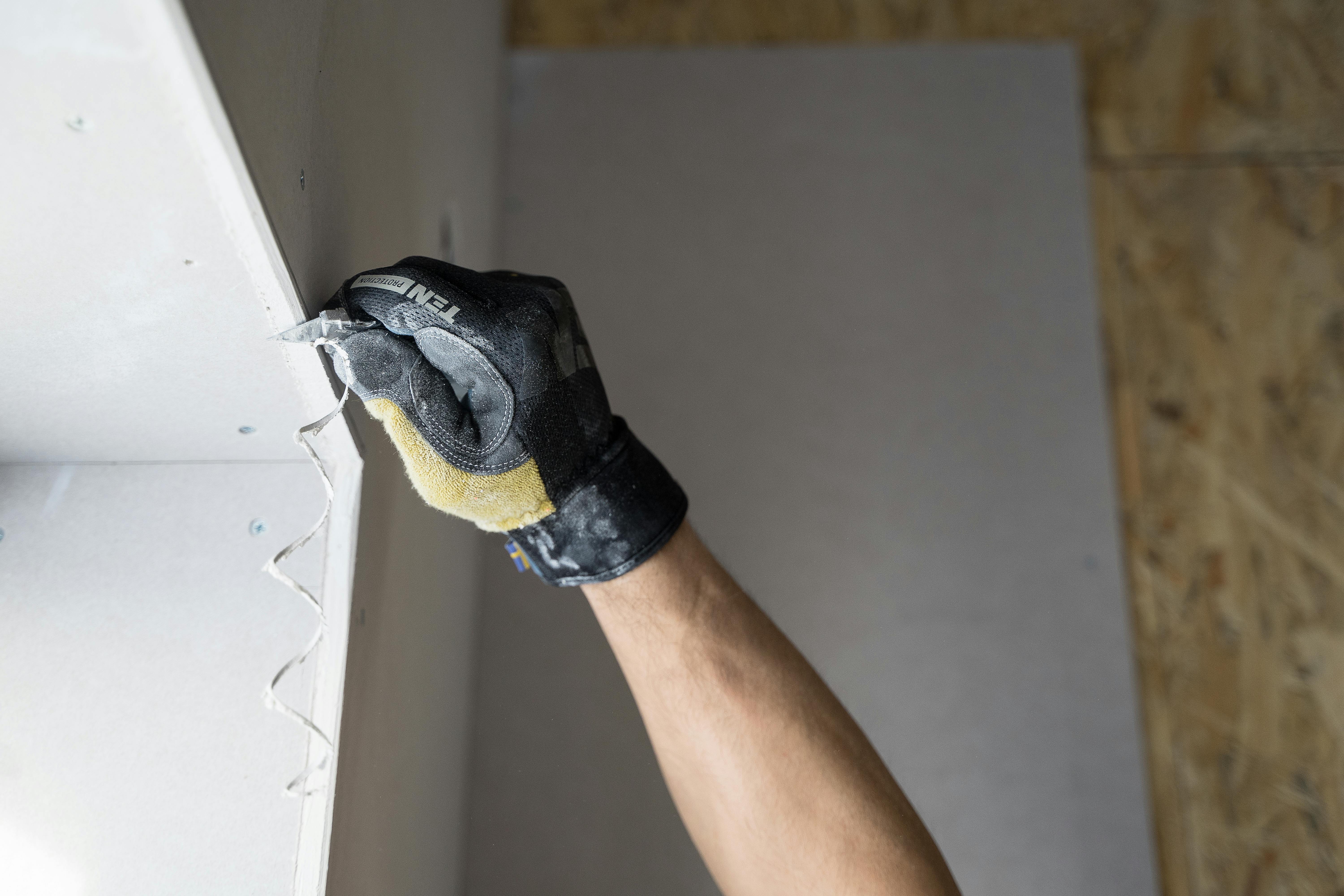
Reference photo: a plasterboard panel being trimmed during interior work.
PART 03 — PLASTERBOARD AND PLASTERING
Once the old tiles come off, some walls are worth repairing and others are not. Where the existing linings can’t sensibly be reused, new plasterboard sheets give a sound, consistent surface to tile against. Ceilings and wall sections that won’t be tiled are then jointed, set and plastered so they finish cleanly against the tiled areas.
Preparation also covers the less visible jobs: removing old adhesive and loose material, making good damaged areas and checking that walls and floors are ready for the next stage. Ivan’s practical experience covers this work directly, along with tiling and flooring.
PART 04
An on-site assessment can establish a lot, but some conditions only show once tiles and linings are removed. Existing conditions and concealed issues can affect the scope after work begins. Ivan explains what he can assess, what remains uncertain and why, so you know which parts of the scope are firm and which depend on what is found.
Where plumbing, electrical or other regulated components form part of the renovation, appropriately licensed specialists undertake that work, and Ivan may coordinate their involvement. See Licensed Specialist Coordination for how the trades fit together.
FURTHER READING
01 Update or Full Renovation? Working Out the Right Scope
03 What to Have Ready Before You Request a Quote
04 Bathroom Renovations in Caulfield and surrounding suburbs
If tiles are cracking or grout is breaking down in your bathroom, you can request a quote and describe what you’re seeing.